The workshop blog
What is zellige? Origins, how it is made and where to use it
By the Hicham Aatiri workshop · Published · 3 min read
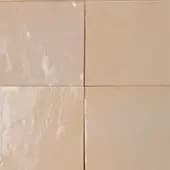
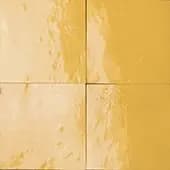
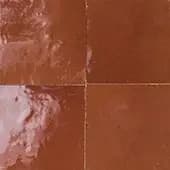
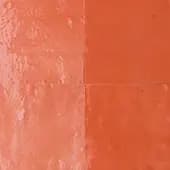
Zellige is a glazed terracotta tile, cut by hand with a hammer, that has covered the walls, floors and fountains of Morocco for centuries. Its uneven surface, its shading and its very thin joints set it apart from any factory-made tile.
Where does zellige come from?
Zellige developed in the architecture of Morocco and al-Andalus in the Middle Ages. It reached a peak under the Marinid dynasty in the 13th and 14th centuries, in the madrasas of Fès, and its close relatives can be seen in the Alhambra in Granada.
The craft has passed from master to apprentice ever since. The master craftsman, the maalem, spends years learning to cut and assemble the pieces. Fès and Marrakech remain the two great centres of zellige in Morocco.
How is zellige made?
A zellige tile goes through the craftsman's hands several times. In our workshop, every tile follows these steps:
- Clay from Fès is soaked, kneaded and shaped into square slabs.
- The slabs dry in the air, then go through a first firing in the kiln.
- Each tile is glazed by hand and fired a second time, which vitrifies the glaze and sets its final colour.
- Finally the maalem cuts each piece with a hammer and bevels its edges, so the tiles can sit close together with very thin joints.
For geometric mosaics, the glazed tiles are cut into dozens of small shapes (stars, diamonds, polygons) that are then assembled like a puzzle. For a 10 × 10 cm square tile, the cutting mainly trues and bevels the edges.
Why is every tile different?
The thickness varies slightly from tile to tile, the glaze pools more or less along the edges, small bubbles and chips appear when the tile is cut, and the shade shifts a little from one firing to the next. These are not flaws: this relief catches the light and gives the wall its depth.
When laying, mix tiles from several boxes to spread the shading across the whole surface, instead of laying one box after another.
Where can you use zellige?
- Kitchen splashbacks: the glaze is easy to clean and stands up to heat.
- Bathrooms and showers, with proper waterproofing and grout (see our guide to caring for zellige).
- Living-room walls, headboards, niches and surrounds.
- Fountains and pools, the centrepiece of the Moroccan riad.
- Tops of zellige tables.
Glazed zellige is softer than porcelain tile. On floors, keep it to rooms with light foot traffic, and tell us about your project before you order.
Zellige, bejmat, cement tile: what is the difference?
| Material | How it is made | Look | |
|---|---|---|---|
| Zellige | Glazed terracotta | Shaped, glazed and cut by hand | Glossy, shaded, uneven |
| Bejmat | Terracotta, glazed or not | Small rectangular brick, often for floors and terraces | Matte or satin |
| Cement tile | Cement and pigments | Pressed, not fired | Matte, pattern through the body |
| Zellige-look tile | Factory ceramic or porcelain | Moulded and glazed in a factory | Even, calibrated, printed shading |
Our zellige
Our 10 × 10 cm tiles are shaped from Fès clay, glazed by hand and cut with a hammer by the maalems of our Marrakech workshop. They cost €110 per m², about 100 tiles, with a 3 m² minimum order and 3 to 5 weeks of making.
See every zellige shade, compose your pattern with the simulator, or ask for a sample to see the colour at home.